Most common heating problems come from four things: a dirty air filter, a wrong thermostat setting, a tripped breaker, or an ignition issue. Start by swapping the filter, confirming the thermostat is set to “heat” and “auto,” and checking the breaker panel. These three steps fix roughly half of all heating calls before a technician ever shows up. For Idaho Falls homeowners staring down a sub-zero night, knowing what to check first can mean the difference between a quick reset and a frozen morning.
Heating accounts for about 29% of your utility bill, so a struggling system also hits your wallet fast. This guide walks through the most common heating problems, the fixes you can handle safely, and the warning signs that need a licensed HVAC contractor right away.
Key Takeaways
- Most heating issues trace back to dirty filters, thermostat errors, ignition trouble, or blocked airflow
- Simple checks (filter swap, thermostat reset, breaker reset) solve about half of all heating calls
- Gas smells, repeated breaker trips, and ignition failures need a licensed HVAC pro right away
- Yearly maintenance prevents most of these problems before Idaho’s deep winter hits
- Sealing ducts can boost system efficiency by up to 20%, cutting waste and uneven heating
Why Does My Furnace Blow Cold Air?
A furnace blowing cold air usually means the system is running the blower fan but not producing heat. The three most common reasons are a thermostat set to “fan on” instead of “auto,” a clogged air filter shutting the burners off on a safety limit, or an ignition system that failed to light. Walk through these checks in order before assuming the worst.
Check the Thermostat Setting First
Set the thermostat to “heat” and the fan to “auto.” When the fan is on “on,” it runs continuously and blows room-temperature air between heating cycles, which feels cold. Also confirm the set temperature is several degrees above the current room reading so the furnace actually calls for heat. If the screen is blank, the batteries may be dead, or a loose access panel could have triggered a safety shutoff. Newer smart thermostats sometimes glitch after a power blip and need a quick restart. For Honeywell models, our guide on how to reset your Honeywell thermostat walks through the steps.
Replace a Clogged Air Filter
A dirty filter is the single most common cause of heating problems. When airflow drops, the heat exchanger gets too hot and the high-limit safety switch shuts the burners off while leaving the blower running, which is why you feel cold air. ENERGY STAR recommends checking the filter every month during peak heating and replacing it at least every three months. In Idaho Falls homes with pets or recent construction dust, monthly swaps are smarter.
Inspect the Pilot Light or Igniter
If the filter and thermostat check out, the next suspect is ignition. Older furnaces use a standing pilot light; if it’s out, the burners cannot light. Newer systems use an electronic igniter or hot surface ignitor that wears out over time. You may hear a click but no whoosh of ignition. Cycle the power at the furnace switch once. If it still does not fire, stop and call a technician, since gas valves and igniters are not safe DIY repairs.
What Causes Uneven Heating in My House?
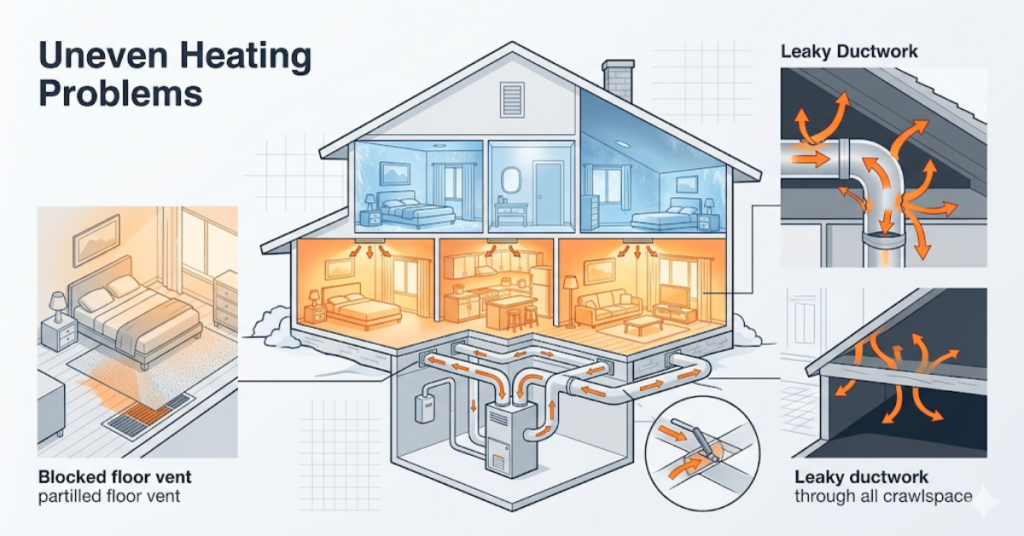
Uneven heating, where some rooms are warm and others stay cold, almost always comes from airflow problems rather than the furnace itself. The heat is being produced, it just isn’t reaching every room evenly. The U.S. Department of Energy notes that poor duct condition can cause heat loss of up to 60% at the registers, which is a huge waste during an Idaho winter.
Blocked Vents and Registers
Walk every room and confirm supply vents are open and clear. Furniture pushed against a register, a rug covering a floor vent, or curtains draped over a wall vent will starve that room of warm air. Return air vents also need to stay clear so the system can pull air back through the furnace. A blocked return forces the blower to work harder and unbalances the whole house.
Leaky or Disconnected Ductwork
Ducts running through unheated attics, crawlspaces, or garages leak warm air into spaces you do not live in. Look for visible disconnections at joints, gaps at the boots where ducts meet registers, or sections of flex duct that have collapsed. Sealing seams with mastic or foil tape and wrapping ducts in insulation tightens the system. A professional duct test can pinpoint hidden leaks that visual inspection misses.
Closed or Stuck Dampers
Some duct systems use manual dampers, small levers inside the ductwork, to balance airflow between zones. If a damper got bumped closed during attic work or seasonal switching, an entire branch of the house may be starved. Locate the damper handles on main trunk lines; they should be parallel to the duct to be open. If you cannot find them or they will not move, an HVAC technician can rebalance the system.
Why Is My Furnace Short Cycling?
Short cycling is when your furnace turns on, runs for a minute or two, shuts off, and then restarts shortly after. This pattern wears out components fast, drives up gas and electric bills, and never lets the house get evenly warm. It is one of the more damaging heating problems if ignored.
Dirty Air Filter Restricting Airflow
Just like with cold air output, a clogged filter is the top cause. The furnace heats up too quickly, the limit switch trips, and the burners shut down. Once it cools, the cycle starts again. Swap the filter and watch for one or two full cycles to see if the pattern stops.
Overheating Limit Switch
If the filter is clean and the unit still short cycles, the heat exchanger may be overheating from another airflow problem like a closed damper, collapsed flex duct, or undersized return air path. A failing limit switch itself can also misread temperature and shut the burners off early. This needs a technician with a multimeter to diagnose.
Oversized System or Bad Thermostat Placement
A furnace that is too big for your home heats the air quickly, hits the setpoint, and shuts off before the rooms farthest from the thermostat catch up. Then they cool fast and it kicks back on. A thermostat mounted in direct sunlight, near a kitchen, or over a supply vent reads the wrong temperature and triggers the same pattern. Moving the thermostat is a fix; replacing an oversized furnace is a bigger conversation that ties into our guide on when to repair vs replace your furnace.
What Do Strange Furnace Noises Mean?
A furnace should run with a steady, low hum. New or louder sounds usually point to a specific problem, and the type of noise tells you what to check.
Banging or Booming on Startup
A loud bang when the burners light often means delayed ignition. Gas builds up in the combustion chamber before the igniter sparks, then ignites all at once. This is a safety issue and can crack the heat exchanger. Shut the system off and call for service. A cracked heat exchanger is dangerous because combustion gases can mix with house air, and the U.S. Department of Energy warns this can cause carbon monoxide poisoning. Every Idaho Falls home should have a working CO alarm.
Squealing or Screeching
A high-pitched squeal usually points to the blower motor. It could be a worn belt on an older unit, dry motor bearings, or a failing inducer fan motor. The fix ranges from lubrication and a belt swap to a full motor replacement. Catching it early is cheaper than a full motor burnout in the middle of January.
Rattling or Humming
Rattling often means loose panels, screws, or ductwork vibrating against framing. Tighten the cabinet screws and check ducts where they meet the furnace. A persistent low hum with no heat output can be a failing capacitor or transformer; that one is a technician call.
Why Won’t My Furnace Turn On at All?
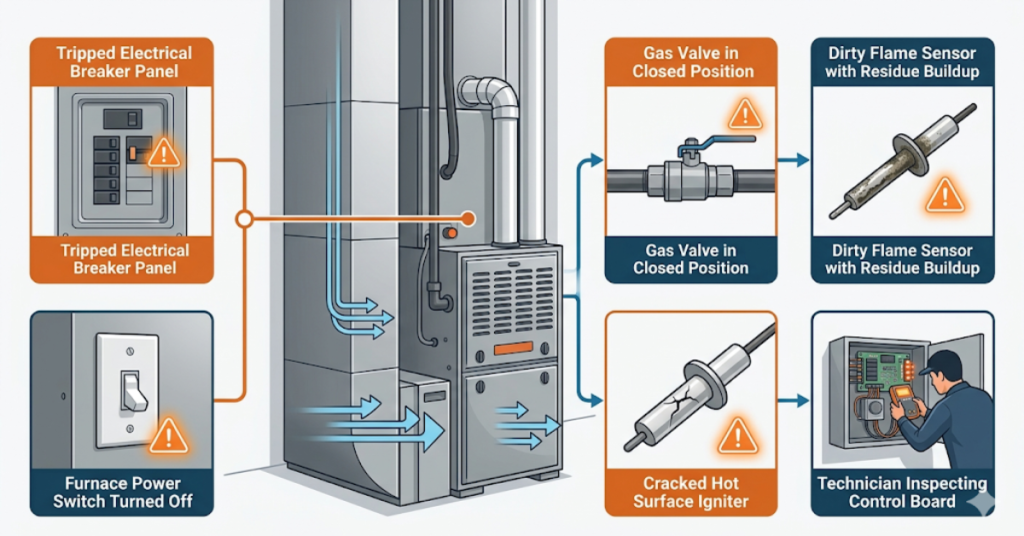
A furnace that is completely dead, no display, no blower, no ignition, has either lost power, lost fuel, or hit a safety lockout. Run through these checks before booking a service call.
Tripped Breaker or Blown Fuse
Check the electrical panel for the furnace breaker. If it tripped, flip it fully off, then back on. If it trips again right away, stop. A breaker that keeps tripping signals a short circuit or failing motor drawing too much current; resetting it repeatedly can cause an electrical fire. Also look for a switch that looks like a light switch near the furnace itself; this gets bumped off during basement work more often than you would think.
Closed Gas Valve
The gas shutoff valve on the pipe feeding your furnace must be parallel to the pipe to be open. If it is perpendicular, gas is cut off. Someone may have closed it during plumbing work or seasonal cleaning. If you smell gas at any point, do not investigate further. Leave the house and call your gas utility, then read our guide on a gas smell near your furnace when you are safely out.
Faulty Ignition or Flame Sensor
A dirty flame sensor is one of the most common no-heat calls. The sensor confirms the burners actually lit; if it is coated in residue, it cannot detect the flame and shuts the gas off as a safety measure. Cleaning takes a technician about ten minutes. Failed hot surface igniters, cracked igniter elements, and bad control boards all produce similar symptoms and need professional diagnosis.
When Should You Call a Pro Instead of Fixing It Yourself?
Some heating problems are safe DIY checks. Filters, thermostat settings, breakers, vents, and basic gas valve position are all fair game. Anything beyond that should go to a licensed HVAC contractor. Call right away if you notice any of these:
- You smell gas anywhere in or near the home
- The furnace breaker keeps tripping after a reset
- You see soot, rust, or cracks on the heat exchanger
- The CO alarm is going off
- The furnace short cycles after a fresh filter
- There is visible water pooling around the unit
- Strange burning, melting plastic, or chemical smells
Combining yearly tune-ups with proper insulation and thermostat habits can cut heating energy use by 20% to 50%, which more than pays for the service visit. A maintenance plan also catches small issues before they fail in February. Our breakdown of the regular HVAC maintenance benefits explains what a tune-up covers.
Stay Warm All Winter With Ridgeline Heating and Cooling
The fastest path to a warm house is knowing what to check yourself and when to call. Filters, thermostats, vents, and breakers are yours. Ignition systems, gas lines, heat exchangers, and electrical faults belong to a licensed pro. Stay on top of yearly maintenance and most of the heating problems in this guide will never reach you in the first place.
If your furnace is acting up right now, do not wait for the next cold snap to make it worse. Ridgeline Heating and Cooling offers fast furnace repair across Idaho Falls and surrounding communities, with upfront pricing and same-day service when you need it most. Call us today and get your home back to comfortable.